Introduction
When building an online business or website, attracting visitors from search engines is one of the most important ways to increase visibility. However, there are different methods of appearing in search results.
Two popular digital marketing strategies are SEO (Search Engine Optimization) and SEM (Search Engine Marketing).
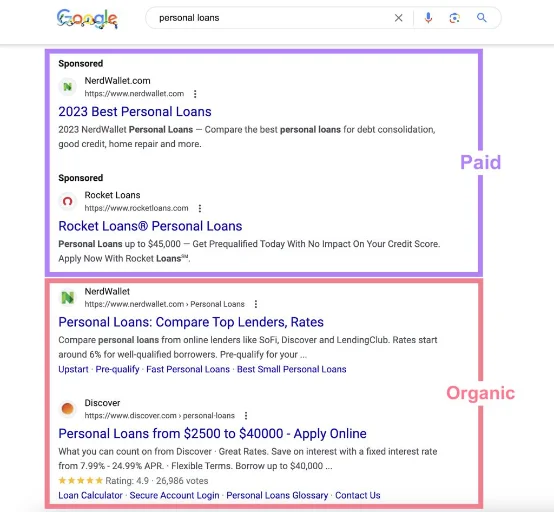
Both approaches help businesses reach people through search engines, but they work differently. SEO focuses on improving organic visibility, while paid search advertising allows businesses to display sponsored listings for selected searches.
Understanding the difference between SEO and SEM can help you choose the right marketing strategy, manage your budget, and attract relevant visitors to your website.
In this guide, you will learn how SEO and SEM work, their advantages and disadvantages, their costs, and how to use both strategies effectively.
What Is SEO (Search Engine Optimization)?
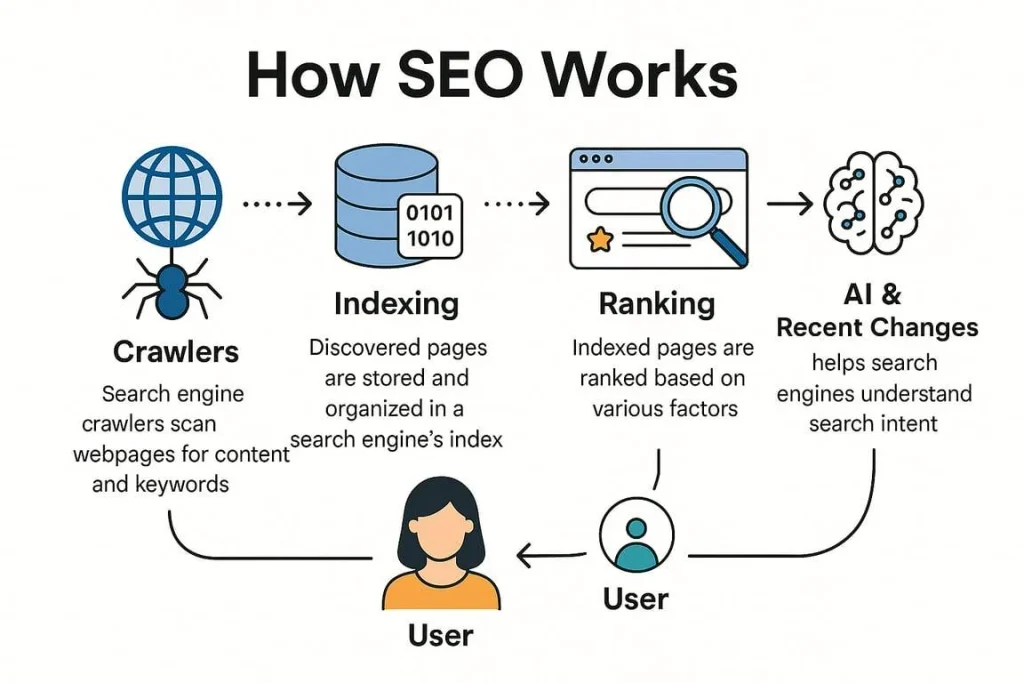
SEO is the process of improving your website so its pages can appear more prominently in unpaid search engine results.
The main goal is to attract relevant visitors through organic search.
For example, imagine you publish an article titled:
10 Best Free Image Editing Tools Online
If your article provides useful information, targets a relevant search topic, and has a technically accessible webpage, it may appear in Google’s organic search results.
SEO involves several activities:
- Keyword research
- On-page SEO
- Technical SEO
- Off-page SEO
- Content optimization
- Internal linking
- Website performance improvements
- Search intent analysis
SEO usually requires consistent work. Results are not immediate or guaranteed, but useful content can continue attracting organic visitors over time.
What Is SEM (Search Engine Marketing)?
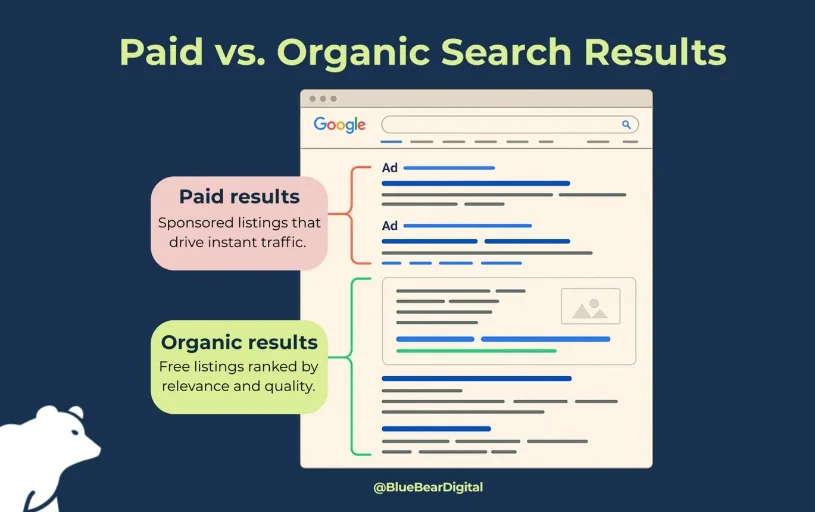
Search Engine Marketing is commonly used to describe marketing through search engines, particularly paid search advertising.
For example, a business may pay to display an advertisement when someone searches for:
- Buy website hosting
- Best online PDF editor
- Affordable SEO services
- Purchase image editing software
Businesses can create search campaigns using advertising platforms such as Google Ads.
Advertisers may select keywords, locations, audiences, budgets, and bidding strategies to reach potential customers.
Paid advertisements are generally identified with a sponsored label in search results.
Important terminology: SEM is sometimes used broadly to include both paid and organic search marketing. In this article, SEM refers primarily to paid search advertising so that the comparison with SEO is clear.
SEO vs. SEM: Key Differences
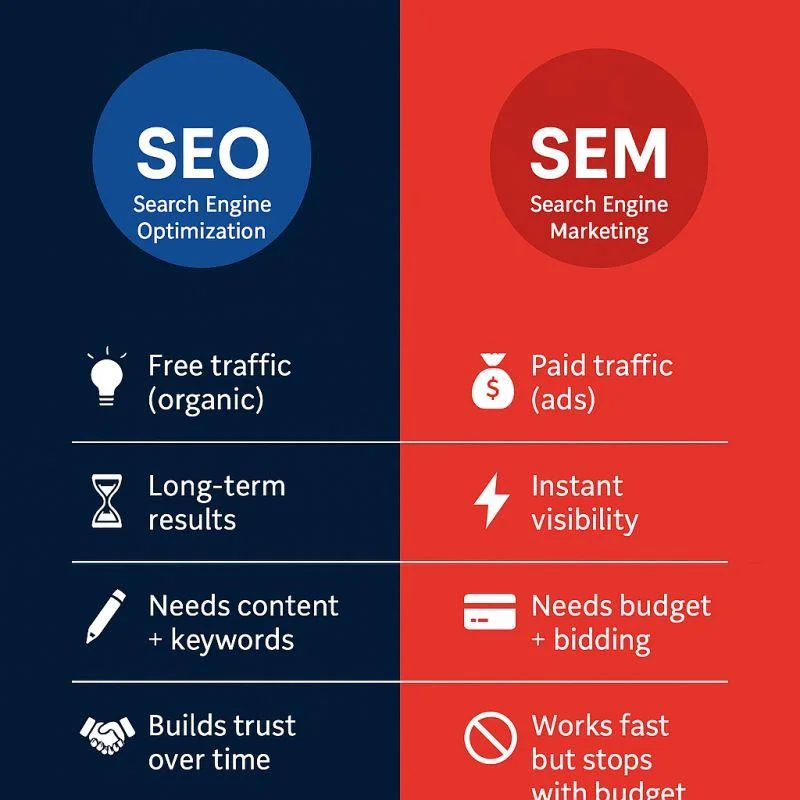
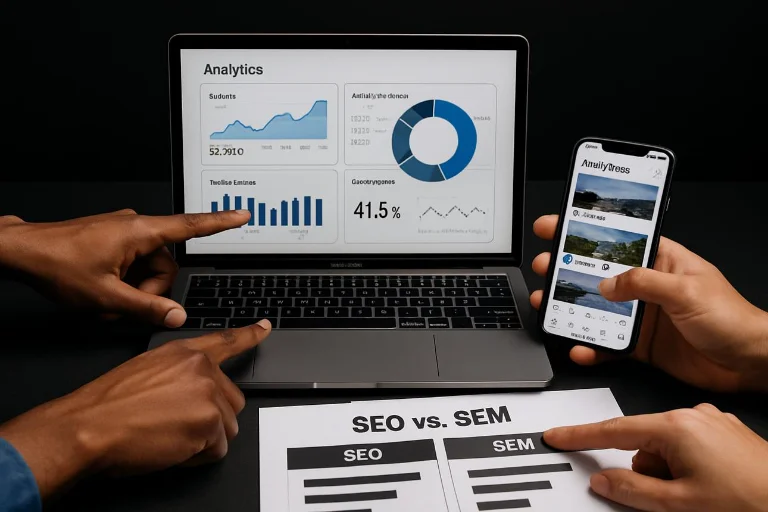
Here is a simple comparison of both strategies.
| Feature | SEO | SEM (Paid Search) |
|---|---|---|
| Traffic type | Organic | Paid |
| Payment model | No payment for organic clicks | Advertising costs |
| Visibility | Earned through search results | Sponsored placements |
| Speed | Usually gradual | Campaigns can start showing quickly |
| Long-term value | Can continue generating traffic | Depends on continued advertising |
| Keyword targeting | Content and search relevance | Keyword and campaign targeting |
| Budget | Content, tools, and website resources | Advertising budget and management |
| Main objective | Grow organic visibility | Generate targeted paid visits |
Both strategies can be useful, depending on your goals and available resources.
How SEO Works
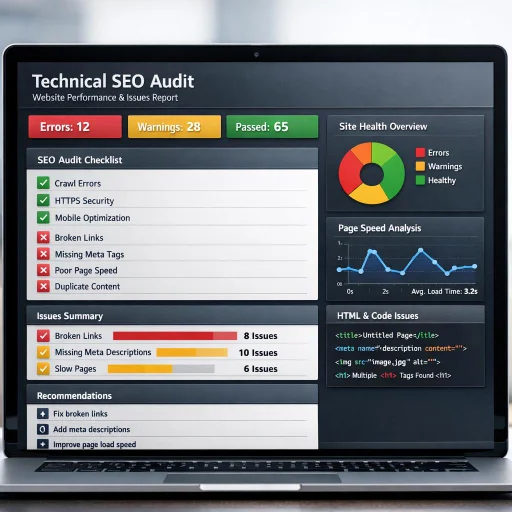
SEO involves several connected activities.
1. Keyword Research
Find relevant search terms that your target audience uses.
Examples:
- Free SEO tools
- How to compress PDF files
- Best WordPress plugins
- Website speed optimization
2. Content Creation
Publish helpful articles, tutorials, product pages, and tools that satisfy users’ search needs.
3. On-Page Optimization
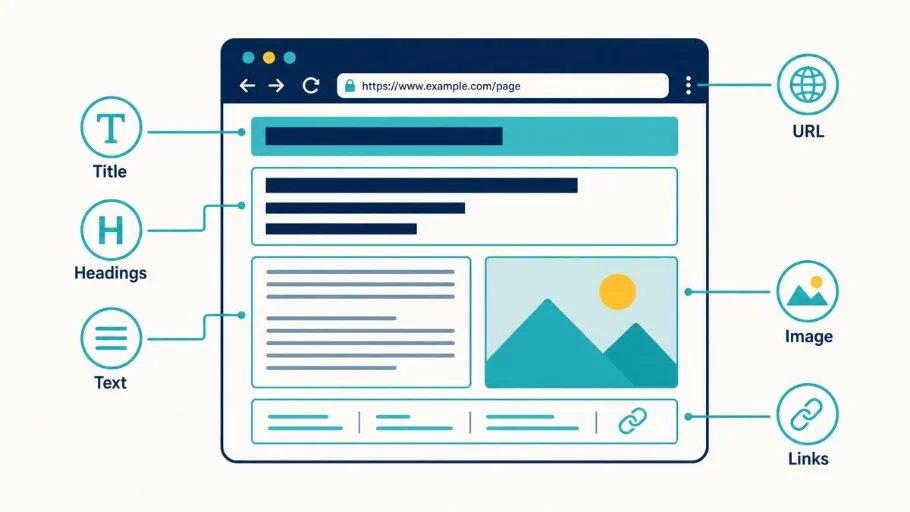
Improve titles, headings, URLs, images, internal links, and content structure.
4. Technical Optimization
Make sure search engines can access important pages. Improve performance, mobile usability, indexing settings, and website structure.
5. Authority and Reputation
Earn relevant backlinks, build brand awareness, and establish genuine relationships within your industry.
6. Performance Monitoring
Use Google Search Console to review impressions, clicks, queries, and indexing information.
SEO is an ongoing process. Regularly review your content and improve pages based on their performance.
How SEM Works
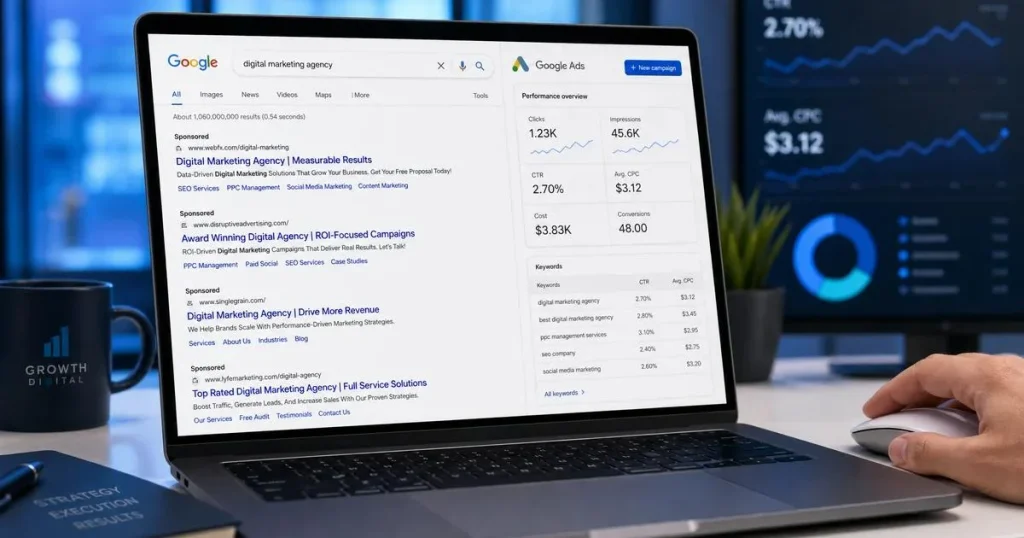
Paid search marketing uses advertising platforms to display sponsored listings.
A typical process includes:
1. Create an Advertising Account
Set up an account with an advertising platform such as Google Ads.
2. Select Your Campaign Objective
Choose an appropriate goal, such as website traffic, leads, sales, or app promotion.
3. Research Advertising Keywords
Identify the search terms that potential customers might use.
For example:
- Buy PDF editor
- Best website hosting plans
- Free image compressor
- Online SEO checker
4. Set Your Budget
Decide how much you are willing to spend on your campaign.
You may choose a daily budget and an appropriate bidding strategy.
5. Create Advertisements
Write relevant advertising headlines and descriptions. Make sure they accurately represent the landing page.
6. Choose a Landing Page
Send visitors to a page that directly matches the advertisement.
For example, an advertisement for a PDF compression tool should lead to the actual PDF compression page rather than an unrelated homepage.
7. Monitor Campaign Performance
Track advertising impressions, clicks, conversions, cost, and return on advertising spend where appropriate.
Advantages of SEO
SEO offers several benefits for website owners.
- No direct payment for organic clicks: You do not pay Google for each organic visitor.
- Long-term traffic opportunities: Useful pages may continue receiving search visits.
- Brand credibility: Organic visibility can help people discover your website.
- Content value: Helpful articles and resources can support your website over time.
- Multiple traffic opportunities: One well-organized page may appear for several relevant queries.
Disadvantages of SEO
- Results can take time.
- Competition can be difficult.
- Search algorithms change.
- Content requires maintenance.
- Technical problems can affect visibility.
- Rankings are never guaranteed.
Advantages of SEM
Paid search advertising also offers important benefits.
- Faster campaign visibility: Eligible advertisements can begin appearing once campaigns are approved and running.
- Budget control: Advertisers can set spending limits.
- Keyword targeting: Campaigns can target relevant searches.
- Measurable results: Advertising platforms provide detailed campaign data.
- Flexible testing: Businesses can test different headlines, landing pages, and bidding strategies.
Disadvantages of SEM
- Advertising requires ongoing spending.
- Competitive keywords can be expensive.
- Traffic may decrease when campaigns stop.
- Poor landing pages can waste advertising budgets.
- Campaigns require monitoring and optimization.
SEO vs. SEM: Which Is Better for Your Website?
The best choice depends on your business goals, budget, competition, and timeline.
| Your goal | Recommended approach |
|---|---|
| Build long-term organic traffic | SEO |
| Promote a new offer quickly | SEM |
| Grow a content-based website | SEO |
| Test demand for a product | SEM |
| Build sustainable search visibility | SEO |
| Generate paid leads for a campaign | SEM |
| Expand search marketing opportunities | Both |
For many businesses, combining SEO and SEM can provide a balanced strategy.
Can You Use SEO and SEM Together?
Yes. Combining both approaches can help businesses reach users at different stages of their decision-making process.
Here is a practical example for an online tools website.
Example: Online PDF tools website
SEO strategy
Publish helpful articles about PDF compression, document conversion, and PDF editing.
Organic traffic
SEM strategy
Run paid search advertisements for relevant commercial searches when the tool and landing page are ready.
Paid traffic
Combined strategy
Use paid campaigns to test relevant search terms and landing pages. Use those insights to inform your longer-term content strategy, while measuring organic and paid performance separately.
This approach can help you understand audience needs while building organic visibility.
How Much Do SEO and SEM Cost?
Costs depend on your website, industry, competition, and marketing approach.
| Expense | SEO | SEM |
|---|---|---|
| Content writing | May require investment | Optional supporting expense |
| SEO tools | Optional paid subscriptions | Keyword research tools may help |
| Website hosting | Usually required | Usually required |
| Backlink outreach | May require time or resources | Not required for ad placement |
| Search advertising | Not required for organic listings | Requires advertising budget |
| Agency or expert | Optional | Optional |
SEO is not completely free because content creation, technical work, hosting, and tools can cost money.
SEM has a more direct advertising cost because businesses pay for eligible ad interactions or other campaign outcomes depending on their bidding model.
7 Practical Tips for Beginners
- Start with keyword research before creating content.
- Understand search intent for your target phrases.
- Publish original and useful website pages.
- Improve technical SEO and mobile usability.
- Use Google Search Console to monitor organic performance.
- Set a realistic advertising budget before running paid campaigns.
- Measure conversions and business outcomes instead of focusing only on visitor numbers.
Best Tools for SEO and SEM
| Tool | Main purpose |
|---|---|
| Google Search Console | Monitor organic search visibility |
| Google Ads | Create and manage paid search campaigns |
| Google Analytics 4 | Analyze website traffic and user activity |
| Google Keyword Planner | Discover keyword ideas and advertising estimates |
| Ahrefs | Research organic keywords and backlinks |
| Semrush | Research SEO and paid search opportunities |
Some tools provide free features, while others require subscriptions or advertising spending.
Common SEO and SEM Mistakes to Avoid
- Expecting SEO rankings immediately after publishing an article.
- Spending money on advertisements without a clear conversion goal.
- Targeting keywords that do not match your products or content.
- Sending paid visitors to irrelevant landing pages.
- Ignoring mobile website performance.
- Measuring success only through impressions or clicks.
- Stopping SEO work because early results are slow.
- Running advertising campaigns without monitoring their spending.
- Assuming paid advertisements automatically improve organic rankings.
- Ignoring the value of helpful content and user experience.
Conclusion
SEO and SEM are two useful approaches to increasing website visibility through search engines. SEO focuses on earning organic traffic through relevant content, technical improvements, and website reputation. SEM focuses on paid advertising that can place your business in sponsored search results.
For long-term growth, invest in useful content and a technically healthy website. If you have an appropriate budget and a clear business objective, paid search campaigns can complement your organic strategy.
The most effective approach is the one that matches your goals, audience, and available resources.
Next article – Article 11: What Is Keyword Research? How to Find the Best Keywords for Your Website
Frequently Asked Questions (FAQs)
SEO focuses on improving unpaid organic search visibility. SEM, as used in this guide, focuses on paid search advertising.
Neither is universally better. SEO can support long-term organic visibility, while SEM can provide faster paid exposure when campaigns are approved and properly configured.
Organic search clicks do not require direct payments to search engines. However, website hosting, content creation, SEO tools, and professional services may involve costs.
Time needed: 5 minutes
Discover the difference between SEO and SEM, compare their benefits and costs, and learn how to use both for website growth.
- Can a new website use SEO and SEM?
Yes. A new website can begin building useful content and technical foundations while testing paid advertising if its budget and landing pages are ready.