Budget International Travel: A Complete Guide to Exploring the World for Less

Back-Roads Touring Tours & Tour Packages
Travel on a Budget: Smart Tips to Save Money Easily | Travel Blog | TripAndStays

“泰国街头美食的魅力,为什么泰国街头美食如此受欢迎?” – THAILAND.GO.TH
Introduction
Traveling internationally is an exciting way to discover new cultures, experience different lifestyles, taste unfamiliar foods, and create unforgettable memories. However, many people believe that exploring another country requires a large bank balance. Fortunately, this is not always true. With careful planning, flexible dates, and smart spending decisions, you can enjoy an international vacation without spending more than you can afford.
Budget international travel is not simply about choosing the cheapest flight or staying in the least expensive hotel. Instead, it involves managing your entire travel budget, including transportation, accommodation, meals, travel insurance, sightseeing, shopping, and unexpected expenses. Even small savings can make a significant difference when combined throughout a trip.
Moreover, traveling on a budget does not mean sacrificing every comfort. You can still enjoy beautiful destinations, comfortable accommodation, and memorable experiences by deciding where to spend and where to save. For example, you might choose an affordable hotel near public transportation while spending a little more on a special local experience.
This comprehensive guide explains ten practical ways to plan an affordable international vacation. Whether you are traveling abroad for the first time, exploring a neighboring country, or planning a longer holiday, these tips will help you control expenses and travel with greater confidence.
1. How to Travel Internationally on a Small Budget

Morocco on a Budget 2026: How to Travel Cheap Without Missing Out
Traveling internationally on a small budget begins with realistic expectations. Rather than planning an expensive vacation and trying to reduce costs later, start by deciding how much money you can comfortably spend.
First, choose a destination that fits your budget. Some countries offer affordable accommodation, inexpensive public transportation, and reasonably priced meals. However, remember that visa requirements, airfare, exchange rates, and seasonal prices can significantly affect your total expenses.
Next, remain flexible with your travel dates. Flights and hotels may cost considerably more during school holidays, festivals, and peak tourist seasons. Therefore, traveling during quieter periods can help you save money while enjoying popular attractions with fewer crowds.
Another effective strategy is to prioritize your experiences. You do not need to visit every attraction or book expensive tours. Instead, explore public parks, historic neighborhoods, local markets, free museums, and walking routes where available.
Additionally, consider staying in hostels, guesthouses, budget hotels, or legally operated vacation rentals. Compare the total cost, including transportation to major attractions, rather than choosing accommodation based on its nightly rate alone.
Finally, maintain an emergency fund separate from your everyday spending money. Although budget travel requires discipline, unexpected medical expenses, transport changes, or additional accommodation costs can arise. Having a reserve helps you manage these situations without financial stress.
2. How to Calculate the Total Cost of an International Trip
Travel Budget Calculator – EasyTripExpenses Blog
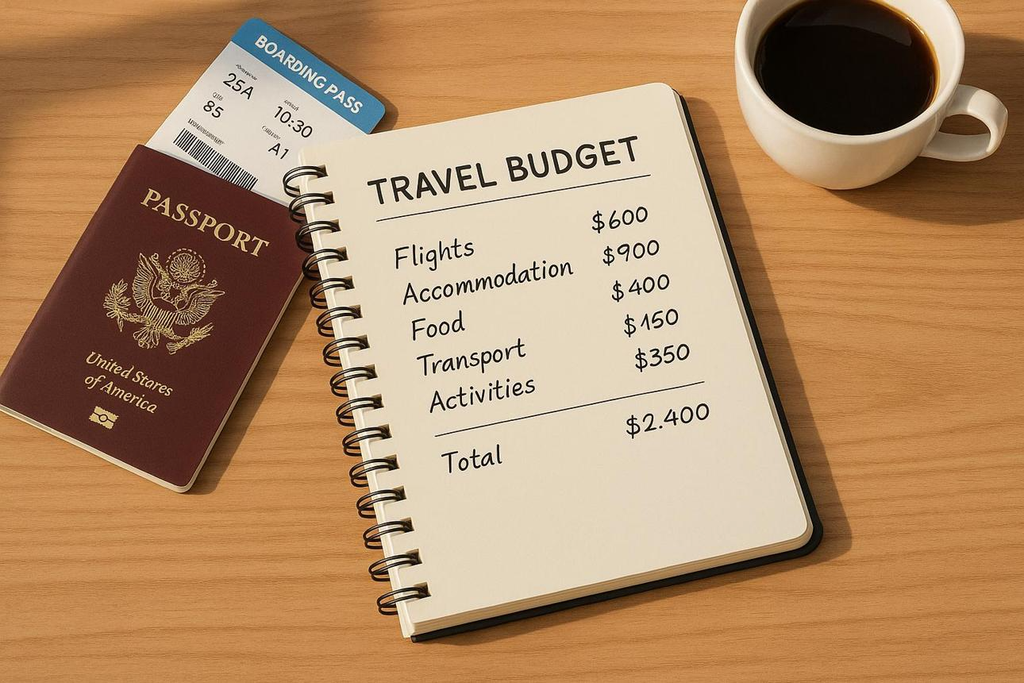
Before booking anything, calculate the estimated cost of your entire trip. This simple step prevents overspending and helps you determine whether your chosen destination is financially realistic.
Start by dividing your budget into major categories. These usually include flights, visas, accommodation, food, local transportation, sightseeing, travel insurance, communication, shopping, and emergency expenses.
For example, a seven-day trip might include the following estimated expenses:
| Expense category | Example budget |
|---|---|
| Return flights | $400 |
| Visa and documents | $80 |
| Accommodation | $210 |
| Food and drinks | $140 |
| Local transportation | $70 |
| Attractions and activities | $80 |
| Insurance and connectivity | $40 |
| Emergency reserve | $100 |
| Estimated total | $1,120 |
These figures are illustrative only. Actual prices depend on your departure city, destination, travel dates, nationality, and personal preferences.
Once you have calculated the total, divide the amount by the number of travel days. In this example, a $1,120 budget over seven days equals $160 per day when the entire trip cost is averaged across the week. However, flights and other advance purchases mean your daily spending allowance will not be identical every day.
Furthermore, research visa fees and entry requirements before purchasing nonrefundable tickets. Some destinations require proof of accommodation, return travel, sufficient funds, or travel insurance.
It is also wise to include a contingency amount of approximately 10–15% when practical. This reserve can help cover price increases, unexpected transport, or other unplanned costs.
3. Best Ways to Find Cheap International Flights
How to Plan a Trip to Europe: Step-by-Step Guide
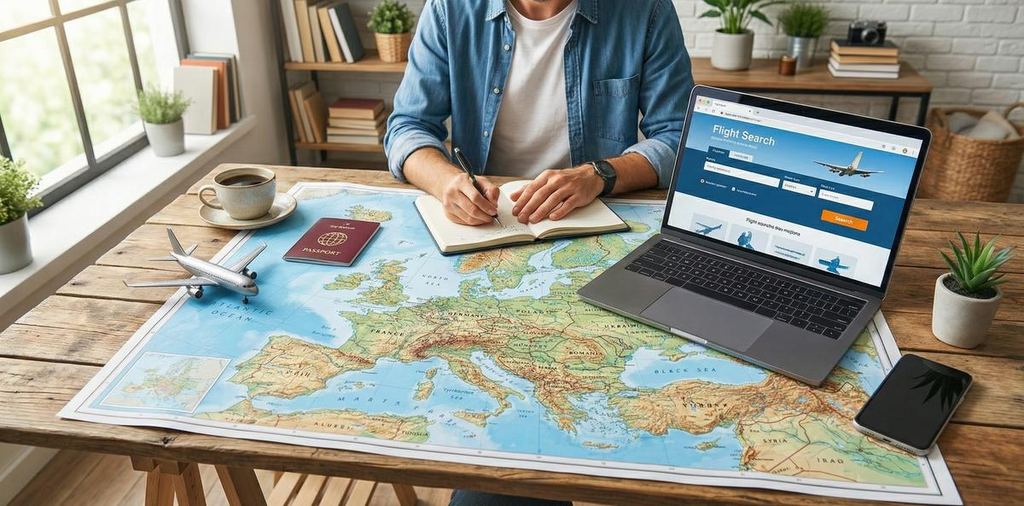
Airfare is often one of the largest expenses in an international vacation. Consequently, finding a reasonably priced flight can free up money for accommodation, meals, and activities.
Begin by comparing fares across several flight-search platforms. These services can help you examine different airlines, routes, departure dates, and nearby airports. However, always verify the final fare and baggage conditions on the airline’s official website before booking.
Flexibility is especially valuable. If your schedule allows, compare departures a few days before and after your preferred date. Midweek departures may sometimes be cheaper, although prices vary according to route, season, and demand.
Additionally, consider alternative airports when the savings justify the extra transportation cost. A cheaper flight to a distant airport might not be a bargain once you add train tickets, buses, overnight accommodation, or taxi fares.
Set price alerts when you are researching flights well in advance. These alerts can help you monitor price changes without repeatedly searching manually. Nevertheless, no single booking day guarantees the lowest price, so focus on comparing actual fares rather than relying on popular booking myths.
Before purchasing a ticket, check:
- Whether checked baggage is included.
- Whether seat selection requires an additional fee.
- Whether meals or airport transfers cost extra.
- Whether the ticket permits changes or refunds.
- Whether connecting flights are protected under one booking.
- Whether you need a transit visa for a stopover.
Finally, compare the complete journey rather than the headline price. A slightly more expensive direct flight may save money and reduce the risk of missing a connection.
4. How to Save Money on Hotels When Traveling Abroad

Baan Sutra Guesthouse, Phuket: Info, Photos, Reviews | Book at Hotels.com
Accommodation can consume a large part of your travel budget, especially in popular tourist destinations. Fortunately, you can reduce this expense by comparing different types of accommodation and choosing a location that suits your itinerary.
First, compare budget hotels, hostels, guesthouses, and vacation rentals. A hostel may be ideal for solo travelers, while a guesthouse or apartment could offer better value for couples and families. However, always check reviews, cleanliness, safety, and the property’s cancellation policy before booking.
Location also matters. Staying outside the main tourist district can sometimes reduce nightly costs. Nevertheless, calculate the price of reaching attractions by bus, train, or taxi. A cheaper hotel far from the city center may ultimately cost more than a centrally located option.
Another useful strategy is to compare the total price rather than the advertised nightly rate. Taxes, cleaning charges, resort fees, and other additional costs can increase your final bill. Therefore, review the complete amount before confirming a reservation.
If breakfast is included, you may save money on your morning meal. Similarly, accommodation with a shared kitchen allows you to prepare simple meals instead of eating at restaurants three times a day.
Consider booking refundable accommodation when your plans are uncertain. Although nonrefundable rates may be cheaper, flexibility can be valuable if your visa application, flight schedule, or itinerary changes.
Most importantly, avoid choosing accommodation solely because it is inexpensive. Read recent guest reviews, confirm the address, and check the neighborhood’s transport options. A clean, secure place with convenient transport can provide better overall value than the cheapest available room.
5. Budget Travel Tips for International Travelers
Successful budget travel depends on daily habits as much as advance planning. Even when you find cheap flights and accommodation, unnecessary purchases can quickly increase your expenses.
One of the easiest ways to save money is to use public transportation. Buses, trains, and metro systems are often less expensive than taxis or private transfers. In addition, walking between nearby attractions lets you explore local streets and discover places that might otherwise go unnoticed.
Food is another area where small decisions can produce meaningful savings. Instead of eating every meal in tourist-focused restaurants, explore local markets, bakeries, food courts, and reasonably priced neighborhood cafés. You can also carry a reusable water bottle where safe drinking water is available.
Furthermore, research free activities before departure. Many cities offer public gardens, historic walking routes, free viewpoints, cultural festivals, and museums with free-entry days. Check official attraction websites because admission policies and opening times may change.
Packing thoughtfully also helps. Bring essential items such as comfortable shoes, suitable clothing, a reusable bag, and any permitted travel-size toiletries you regularly use. This reduces the need to buy replacements at expensive airport shops.
Keep track of your expenses every day. A budgeting application, spreadsheet, or simple notebook can show whether you are staying within your planned allowance. If you spend more than expected on one day, adjust the following day’s discretionary spending.
Finally, avoid spending money just because an activity is popular online. Choose experiences that genuinely interest you, and remember that a meaningful trip does not require luxury shopping, expensive tours, or a packed schedule.
6. How to Manage Money in a Foreign Country
Managing money abroad requires preparation because exchange rates, withdrawal fees, and payment methods vary between destinations. A clear plan can help you avoid unnecessary charges and protect your travel funds.
Before departure, check your bank’s international transaction fees and confirm whether your debit or credit card works in your destination. You should also inform your bank about travel plans if required by its policies.
Next, research the local currency and its approximate exchange rate. Understanding the value of everyday purchases makes it easier to recognize unreasonable prices and monitor your spending.
When exchanging money, compare the total amount you will receive after fees. Airport exchange counters can be convenient, but their rates may be less favorable than alternatives. Avoid exchanging a large amount without first checking the available options.
At payment terminals and ATMs, you may be asked whether you want to pay in your home currency or the local currency. If the machine or merchant offers currency conversion, choosing the local currency often avoids the additional conversion markup associated with dynamic currency conversion. However, your own bank may still charge a foreign transaction fee.
For better financial control, separate your funds into everyday spending money and an emergency reserve. Keep your cards and cash in different secure locations, and store copies of important financial contact details separately from your wallet.
Additionally, use secure ATMs attached to reputable banks where possible. Cover the keypad when entering your PIN, check the machine for suspicious attachments, and avoid sharing your card details or banking passwords with anyone.
7. Cash vs. Credit Cards When Traveling Internationally
Neither cash nor credit cards are ideal for every international transaction. In practice, carrying a combination of payment methods usually offers the greatest flexibility.
Cash is useful for small purchases, local markets, tips, and businesses that do not accept cards. It can also be helpful during temporary payment-network outages. Nevertheless, carrying too much cash increases the potential loss if your wallet is stolen.
Credit cards, meanwhile, can be convenient for hotels, airline bookings, restaurant bills, and emergency purchases. Depending on the card and its terms, you may also receive purchase protections or travel-related benefits. However, foreign transaction fees, cash-advance charges, and interest can make certain transactions expensive.
Debit cards are useful for accessing money directly from your bank account. Even so, check ATM withdrawal fees and your bank’s exchange-rate policy before traveling.
| Payment method | Main advantage | Possible drawback |
|---|---|---|
| Cash | Useful for small purchases and local markets | Can be lost or stolen |
| Credit card | Convenient for bookings and larger payments | May involve fees or interest |
| Debit card | Direct access to your bank funds | ATM and foreign transaction fees may apply |
| Travel money card | Can support planned currency spending | Fees, restrictions, and exchange-rate terms vary |
For added security, carry a primary card and a separate backup card, provided you can store them safely. Keep emergency contact information for your bank so you can quickly freeze a lost or stolen card.
Before leaving home, check whether your destination commonly accepts cards or relies heavily on cash. This is particularly important when visiting smaller towns, rural areas, or remote destinations.
8. Hidden Costs of International Travel You Should Know
Many travelers calculate flights and accommodation carefully but overlook smaller expenses that accumulate throughout a trip. These hidden costs can turn an affordable vacation into an expensive one.
Visa fees and document-related expenses are among the first costs to research. Depending on your nationality and destination, you may need a visa, an electronic travel authorization, passport renewal, or additional documentation. Transit requirements can also apply when changing planes in another country.
Baggage fees are another common surprise. Some airlines include only a small personal item in their cheapest fares. Consequently, adding cabin baggage, checked luggage, or overweight baggage may significantly increase the ticket price.
Accommodation taxes, deposits, cleaning charges, and resort fees may also apply. Similarly, airport transfers, tourist taxes, paid Wi-Fi, international roaming, and ATM fees can add to your spending.
Travel insurance is an additional expense worth considering. The appropriate policy depends on your destination, planned activities, health needs, and the financial risks you want covered. Review exclusions, coverage limits, and emergency procedures before purchasing.
Unexpected expenses can include medical treatment, prescription replacements, missed connections, and emergency accommodation. Although you cannot predict every situation, a contingency fund can reduce the financial impact.
To avoid unpleasant surprises, create a separate list of costs that are not included in your flight or hotel price. Read booking terms carefully and confirm whether taxes, baggage, meals, transfers, and cancellation charges are included.
Above all, calculate the total trip cost, not merely the advertised price. A slightly more expensive booking with baggage and transfers included may be better value than a cheaper option with multiple additional charges.
9. How to Find Affordable Destinations Around the World
Choosing the right destination can make a major difference to your overall travel expenses. Rather than focusing exclusively on famous capitals and luxury resorts, compare destinations based on the cost of the complete trip.
Start by researching countries and cities where accommodation, food, and public transportation fit your budget. However, low daily costs do not automatically mean a destination is inexpensive to reach. A costly flight can outweigh savings on meals and hotels.
Compare the following factors before making your decision:
- Return airfare from your departure city.
- Visa requirements and application fees.
- Average accommodation prices during your dates.
- Daily food and local transportation costs.
- Entrance fees and activities you want to experience.
- Travel insurance and connectivity expenses.
- Seasonal weather, safety considerations, and transport availability.
Traveling during the shoulder season can sometimes provide a good balance between weather, visitor numbers, and prices. These periods fall between the busiest and quietest travel seasons, although the exact timing differs by destination.
You can also consider destinations with reliable public transportation and free or inexpensive attractions. Cities that are easy to explore on foot may reduce your daily transport expenses while giving you more opportunities to experience local life.
Before booking, check current entry rules and official travel advisories. A destination that looks affordable online may require additional documents, special permits, or expensive transport between attractions.
Finally, compare two or three destinations using the same trip length and spending categories. This approach gives you a more realistic picture of which location offers the best value for your money.
10. How to Plan an International Vacation Without Overspending
Planning an international vacation without overspending becomes easier when you make financial decisions in the right order. Start by setting a maximum budget based on your savings rather than borrowing money or relying on uncertain future income.
Next, choose your destination and approximate dates. Research visa requirements and major expenses before booking nonrefundable flights. Once your travel dates and entry requirements are reasonably clear, compare flights and accommodation together to understand the full cost.
Afterward, create a daily spending allowance for meals, transport, sightseeing, and other activities. Keep separate amounts for prepaid expenses and money you will spend during the trip.
Use a simple budgeting spreadsheet or travel app to record your estimates. Update it when you make bookings, and compare the actual cost with your original plan. If airfare increases, for example, you might choose more affordable accommodation or reduce optional activities to remain within budget.
Additionally, avoid last-minute purchases whenever possible. Booking essential transport early may help you find suitable prices, although some reservations are better left flexible when plans are uncertain. Always compare cancellation terms before choosing the cheapest option.
Be cautious of unrealistic deals, fake booking websites, and unsolicited messages requesting payment. Use reputable booking services, verify the website address, and keep confirmation emails and receipts.
Most importantly, do not spend your entire budget before the trip begins. Reserve money for emergencies, unexpected delays, and essential needs. Once you arrive, review your spending regularly and adjust your plans when necessary.
An affordable international vacation is not about avoiding every expense. Instead, it is about making informed choices, spending on what matters to you, and returning home without unnecessary financial pressure.
Conclusion
Budget international travel is possible when you plan carefully, compare prices, and make sensible financial decisions. From finding affordable flights and accommodation to managing foreign currency and avoiding hidden fees, every smart choice can help you make the most of your money.
Remember that an enjoyable vacation does not require luxury hotels or expensive activities. Instead, focus on meaningful experiences, explore local culture, use affordable transportation, and maintain a realistic spending plan.
Ultimately, the best international trip is one that delivers memorable experiences without creating financial stress after you return home. Start planning early, stay flexible, and use these ten strategies to turn your travel dreams into a more affordable reality.
Frequently Asked Questions About Budget International Travel
The amount depends on your destination, departure city, trip length, visa requirements, and travel style. Start by calculating flights, accommodation, food, transportation, insurance, and activities. Then add an emergency reserve of around 10–15% if your finances allow. Comparing destinations before booking can help you find an option that fits your budget.
The cheapest approach is usually to combine affordable destinations, flexible travel dates, competitive airfare, budget accommodation, and public transportation. Moreover, eating at local restaurants, enjoying free attractions, and avoiding unnecessary baggage fees can reduce your overall costs. Always compare the complete journey rather than choosing an option based on its lowest advertised price.
Compare flight prices across multiple search platforms and airline websites. In addition, check nearby airports, consider alternative travel dates, and set price alerts. Before booking, review baggage allowances, stopover requirements, cancellation policies, and the cost of reaching your destination airport. No particular booking day guarantees the cheapest fare.
Time needed: 9 minutes
Set a realistic spending limit before booking, calculate the full trip cost, and track expenses daily. Furthermore, research additional charges such as baggage fees, tourist taxes, roaming costs, and airport transfers. Keep emergency money separate from your everyday spending budget, and prioritize experiences that matter most to you.
- Is cash or a credit card better when traveling abroad?
Carrying both is often the most practical solution. Cash is useful for small purchases and businesses that do not accept cards, while credit or debit cards can provide convenient payment options for hotels, restaurants, and transport. Check foreign transaction fees and ATM charges before leaving, and keep backup payment methods in separate secure locations.

Perfect For:
Personal Finance Management
Family Budget Planning
Students & Professionals
Freelancers & Small Business Owners
Daily Expense Tracking
Savings & Financial Goal Management
Download > Expense Finance Tracker pro
https://play.google.com/store/apps/details?id=com.app.ExpenseFinanceTrackerPro&pcampaignid=web_share