Introduction
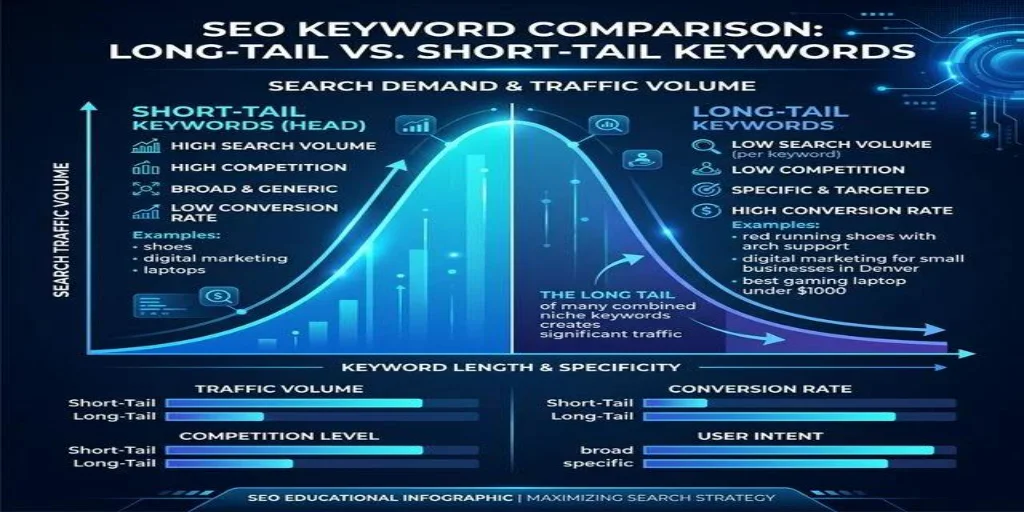
Choosing the right keywords is an important part of building a successful SEO strategy. However, not all keywords are the same. Some are broad and contain only one or two words, while others are longer and describe a specific search.
These are commonly known as short-tail keywords and long-tail keywords.
Understanding the difference can help you create more relevant website content, attract targeted visitors, and identify realistic opportunities in search results.
For example, someone searching for “SEO tools” may be exploring different options. Another person searching for “best free SEO tools for WordPress beginners” has a much more specific requirement.
In this guide, you will learn how both keyword types work, see practical examples, and discover which keywords you should target for your website.
What Are Short-Tail Keywords?
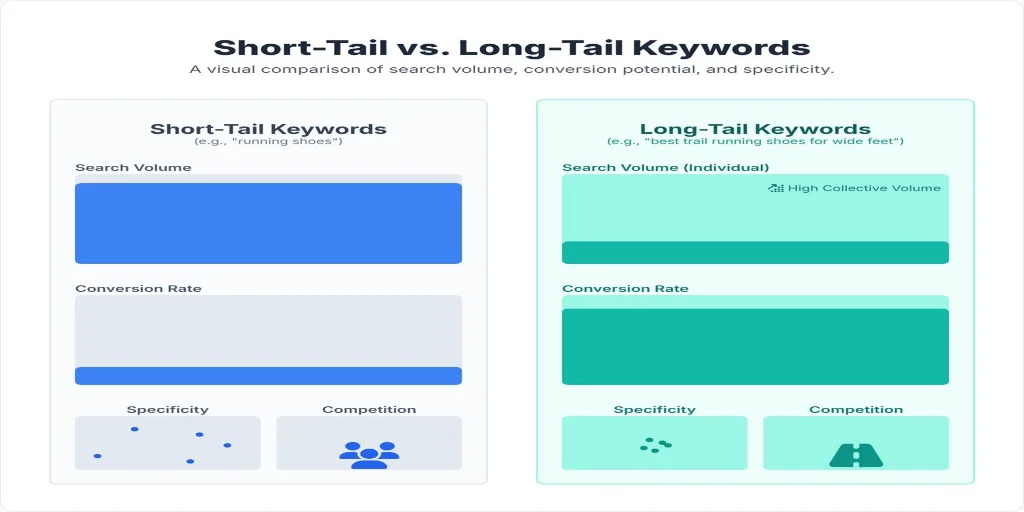
Short-tail keywords are broad search phrases that usually contain one or two words. They generally cover a wide topic and can have substantial search demand.
Examples include:
- SEO
- WordPress
- Recipes
- Online tools
- Image editor
- Digital marketing
- Web hosting
These keywords can attract a wide audience because they cover general subjects.
However, their broad meaning can make it difficult to understand exactly what every searcher wants.
For example, someone searching for “WordPress” might want to download WordPress, learn how to use it, find themes, or troubleshoot a website.
Advantages of Short-Tail Keywords
- They can reach a broad audience.
- They introduce your website to general topics.
- They can support long-term topical content strategies.
- They are useful for building main website categories.
- They can help establish your site’s overall subject focus.
Disadvantages of Short-Tail Keywords
- Competition may be high.
- Search intent can be unclear.
- Ranking may require significant authority and resources.
- Visitors may not always be interested in your specific service.
- Broad search terms can be difficult to target with one page.
What Are Long-Tail Keywords?

Long-tail keywords are more specific search phrases that usually contain three or more words.
They describe a particular question, need, product, or solution.
Examples include:
- Best free SEO tools for beginners
- How to compress PDF files online
- Free image resizer without losing quality
- Easy chicken biryani recipe at home
- How to improve WordPress website speed
Long-tail keywords often have lower individual search demand than broad terms. However, they can attract visitors with clearer intentions.
For example, someone searching for “compress PDF online without losing quality” probably wants a PDF compression solution.
Advantages of Long-Tail Keywords
- They can match specific search intent.
- They may have less competition than broader phrases.
- They help you create focused content.
- They can attract highly relevant visitors.
- They provide ideas for tutorials, FAQs, and specialized landing pages.
Disadvantages of Long-Tail Keywords
- Individual phrases may have limited search demand.
- Some phrases may receive very little traffic.
- Researching and organizing many variations takes time.
- Similar keywords may need to be covered by one page rather than separate articles.
Short-Tail vs. Long-Tail Keywords: Key Differences
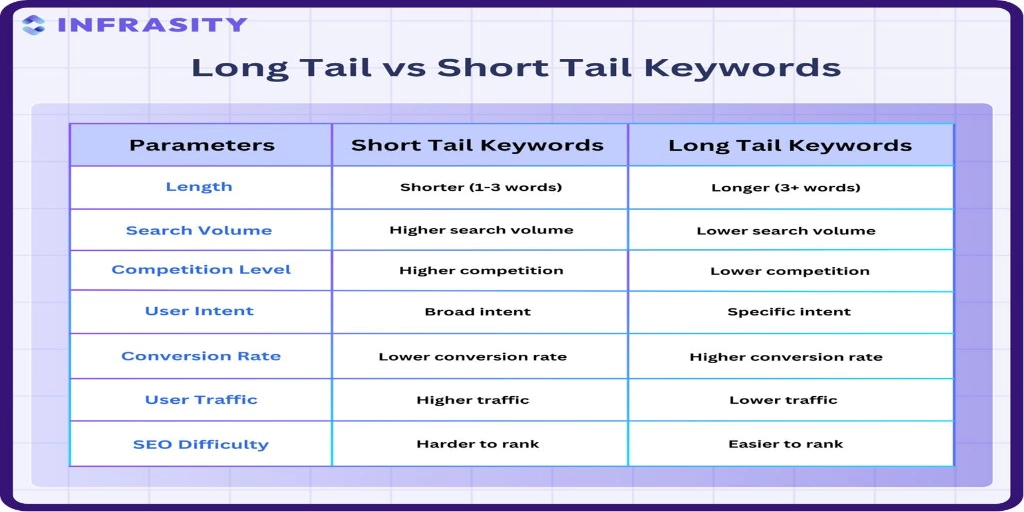
| Feature | Short-Tail Keywords | Long-Tail Keywords |
|---|---|---|
| Length | Usually 1–2 words | Usually 3 or more words |
| Search demand | Often broader | Often more specific |
| Competition | Frequently high | May be lower |
| Search intent | Can be unclear | Often clearer |
| Audience | Broad | More targeted |
| Content approach | General topic pages | Specific articles or landing pages |
| Example | Image compressor | Free image compressor online |
| Best use | Main topics and categories | Specific user needs |
These are general patterns, not strict rules. A long-tail keyword can still be highly competitive, and a short-tail keyword may sometimes have clear intent.
Examples of Short-Tail and Long-Tail Keywords
Here are practical examples from different website categories.
| Short-tail keyword | Long-tail keyword |
|---|---|
| SEO | Best free SEO tools for beginners |
| How to convert PDF to Word online | |
| Images | How to reduce image file size |
| Recipes | Easy chicken biryani recipe at home |
| WordPress | How to improve WordPress website speed |
| Hosting | Affordable web hosting for small businesses |
| Calculator | Free online salary calculator |
| Marketing | How to increase organic website traffic |
| Backlinks | How to build quality backlinks for a new website |
| Video editing | Best free online video editing tools |
The longer phrases often provide more specific content ideas.
Which Keywords Should Beginners Target?
For many new websites, long-tail keywords are a practical starting point.
A new website may struggle to compete for broad terms such as “SEO” or “PDF.” More specific topics can provide opportunities to publish useful, focused content.
Consider this example:
Broad keyword: PDF
More specific keywords:
- How to convert PDF to JPG on mobile
- How to compress PDF files online
- How to merge two PDF files for free
- How to protect a PDF with a password
Each phrase describes a more specific need.
However, do not automatically create a separate page for every variation. First check whether the searches have meaningfully different intent. If several phrases need the same solution, one comprehensive page may serve them better.
How to Find Long-Tail Keywords
Follow these steps to discover useful keyword ideas.
1. Start with a Main Keyword
Choose a topic relevant to your website.
For example:
Main keyword: Image Compressor
2. Explore Google Search Suggestions
Enter your main keyword into Google and review the suggested searches.
You may discover phrases such as:
- Image compressor online free
- Compress JPG without losing quality
- Reduce image size in KB
- Compress PNG images online
Treat these suggestions as ideas to investigate, not proof of search volume.
3. Find Questions People Ask
Look for question-based keywords:
- How do I compress an image?
- Why is my image file too large?
- What is the best image format for websites?
- How can I reduce photo size?
These questions can inspire tutorials and helpful FAQ sections.
4. Use Keyword Research Tools
Useful tools include:
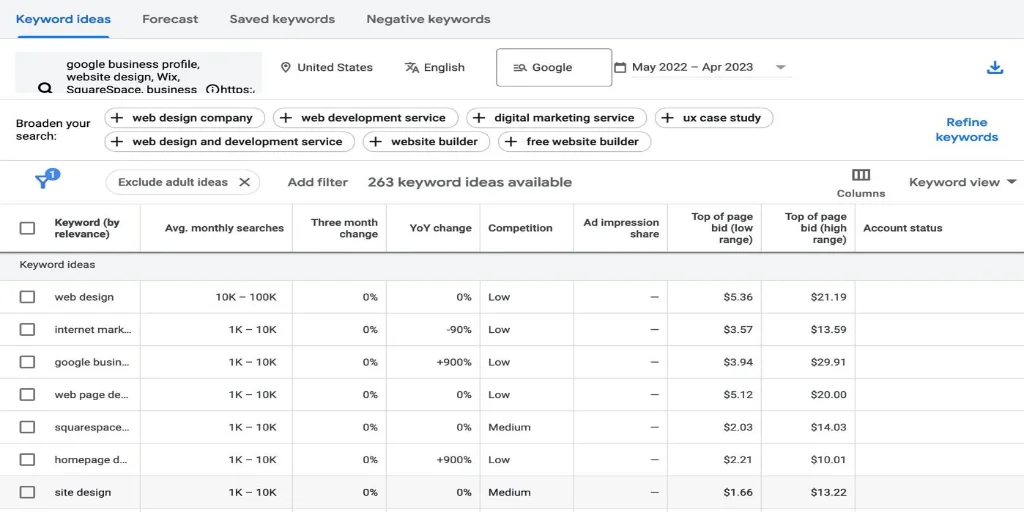
- Google Keyword Planner – Discover keyword ideas and advertising estimates.
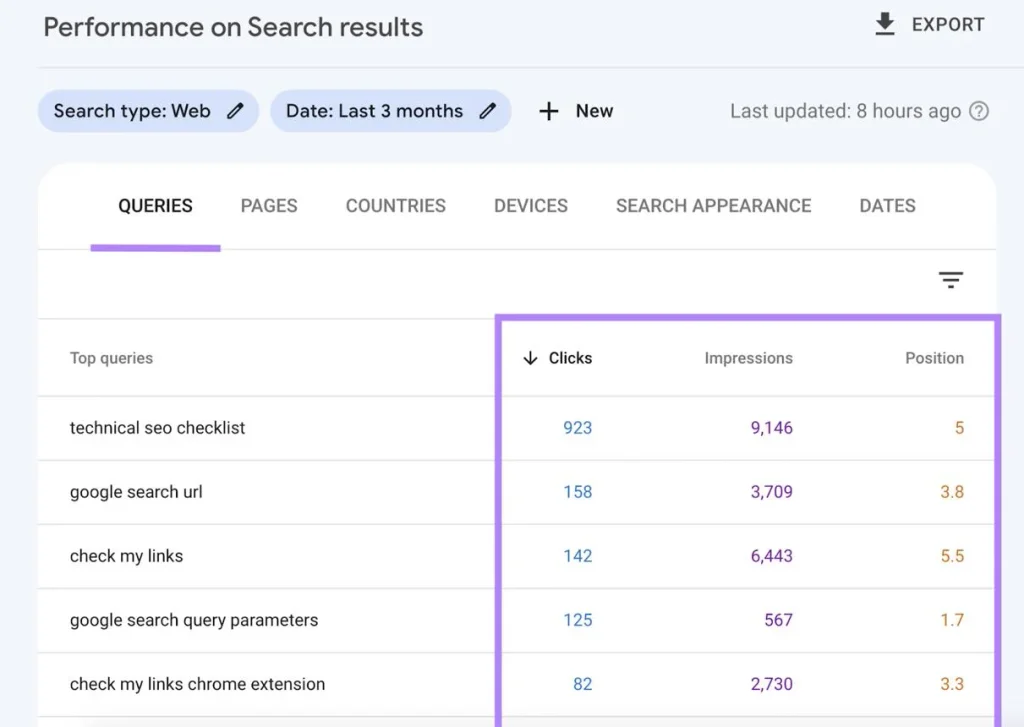
- Google Search Console – Find searches already generating impressions for your website.
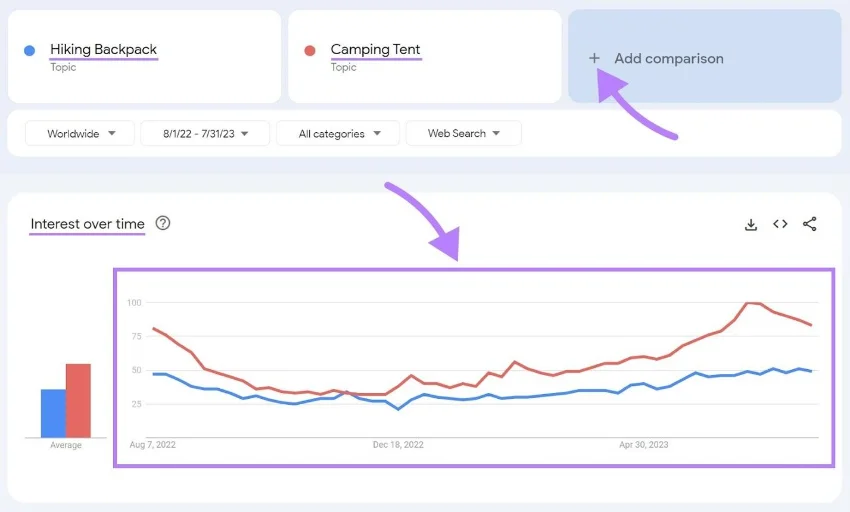
- Google Trends – Explore changes in search interest.
- Ahrefs – Research keyword ideas and competition.
- Semrush – Analyze keywords and competitor visibility.
5. Analyze Search Intent
Check what people expect when searching for a phrase.
For example:
- “What is image compression?” – Informational intent.
- “Compress image online” – Tool-oriented intent.
- “Best image compressor” – Commercial investigation.
Choose a page format that satisfies the search.
6. Check Competition and Relevance
Review the pages already ranking for your target phrase.
Ask yourself:
- Are the results articles, tools, or product pages?
- Can your page provide a better user experience?
- Does your website cover this subject?
- Can you create genuinely useful content?
- Is the search relevant to your business goals?
7. Group Related Keywords
Organize similar phrases into topic groups.
For example:
Image compression topic
- Compress image online
- Reduce image file size
- Free JPG compressor
- Compress PNG images
- Reduce photo size for websites
This group may be suitable for one strong image compression tool page, supported by separate tutorials when they answer different questions.
Should You Target Short-Tail or Long-Tail Keywords?
The best approach is usually to use both.
Recommended keyword strategy
Short-tail keywords
Use them to plan major website topics, categories, and broad resource pages.
Long-tail keywords
Use them to develop specific articles, tutorials, and focused landing pages.
Combined approach
Build broad topic coverage while publishing specific pages that solve individual user problems.
For example, a website about SEO could have a main SEO resources page and supporting articles about keyword research, technical SEO, backlinks, and content optimization.
Common Mistakes to Avoid
- Assuming every long-tail keyword is easy to rank for.
- Targeting keywords unrelated to your website.
- Ignoring search intent.
- Creating duplicate articles for similar phrases.
- Choosing keywords only by search volume.
- Repeating long-tail phrases unnaturally.
- Ignoring broad topics when planning website structure.
- Forgetting to update existing content.
- Publishing pages that do not provide a useful solution.
- Expecting guaranteed rankings from keyword selection alone.
Conclusion
Short-tail and long-tail keywords both play important roles in SEO. Broad keywords help organize your website around major topics, while specific phrases can help you create focused content for particular user needs.
If you are building a new website, start by identifying relevant long-tail opportunities. Develop useful pages, organize related keywords into topic groups, and gradually expand your coverage of broader subjects.
Remember that keyword selection is only one part of SEO. Helpful content, search intent, technical performance, and a positive visitor experience are also essential for sustainable organic growth.
Next article – Article 13: How to Find Low-Competition Keywords That Are Easier to Rank For
Frequently Asked Questions (FAQs)
Short-tail keywords are broad and general, while long-tail keywords are more specific and usually describe a particular search need.
They may have less competition, but this is not guaranteed. Ranking difficulty depends on the topic, search intent, competitors, and your website’s ability to provide useful content.
Many have lower individual search volumes, but some receive substantial demand. A collection of relevant long-tail topics can also attract meaningful combined traffic.
Time needed: 5 minutes
Compare short-tail and long-tail keywords, explore examples, and learn which SEO keywords to target for better search visibility.
- How do I find long-tail keywords for free?
Use Google search suggestions, related searches, Google Trends, Google Search Console, and the free features available in keyword research tools.