What Is Keyword Difficulty? How to Measure SEO Competition and Choose the Right Keywords
Choosing the right keywords is one of the most important parts of SEO. However, finding a keyword with good search volume is not enough. You also need to understand how difficult it may be to rank for that keyword.
This is where keyword difficulty becomes useful. It helps website owners, bloggers, and SEO beginners estimate how competitive a search term might be before creating content.
In this guide, you’ll learn what keyword difficulty means, how SEO tools calculate it, how to check competition manually, and how to choose keywords that match your website’s current strength.
What Is Keyword Difficulty in SEO?
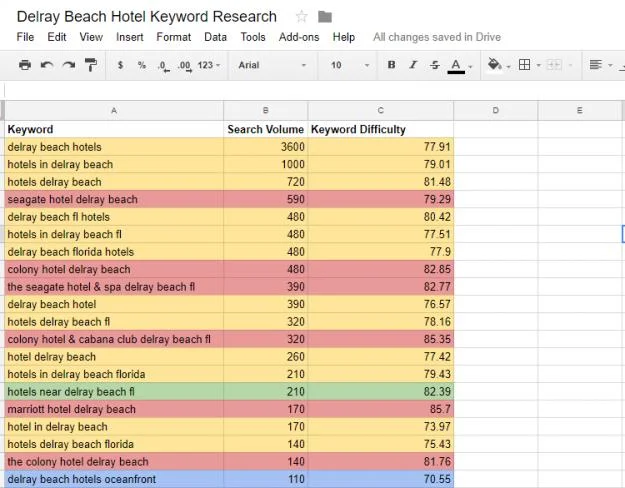
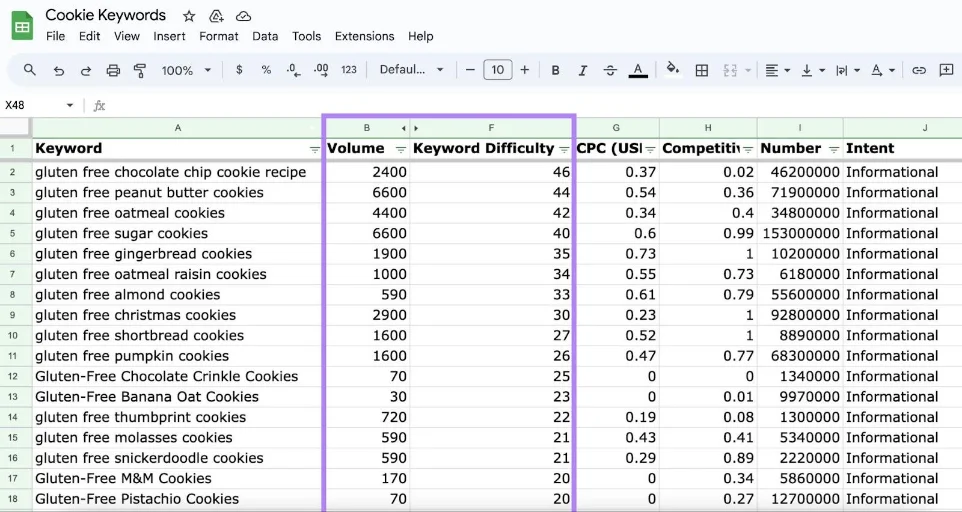
Keyword difficulty (KD) is an SEO metric that estimates how challenging it may be to rank on Google’s first page for a particular keyword.
Many SEO platforms display keyword difficulty as a score, commonly from 0 to 100. A lower score generally suggests less competition, while a higher score suggests stronger competing pages.
For example:
| Keyword | Example KD score | General difficulty |
|---|---|---|
| Best free image compressor for students | 12 | Low |
| Online image compressor | 45 | Medium |
| Image compressor | 75 | High |
These are illustrative scores, not live keyword measurements.
Remember that keyword difficulty scores are estimates from third-party SEO tools. Google does not publish an official keyword difficulty score.
Why Is Keyword Difficulty Important?
Keyword difficulty helps you decide which search terms deserve your attention.
It can help you:
- Find opportunities that may be easier to target.
- Avoid competing immediately for extremely broad keywords.
- Plan content for new websites.
- Compare similar keyword opportunities.
- Prioritize content creation.
- Build a realistic SEO strategy.
For example, a new website about online tools might struggle to rank for a broad phrase such as “image editor.” A more specific phrase such as “free image resizer for passport photos” may offer a more focused opportunity.
What Factors Affect Keyword Difficulty?
SEO platforms use different methods to estimate keyword competition. Their calculations are proprietary, but common factors include:
1. Backlink Profiles
Pages with strong, relevant backlinks may have an advantage because links can help search engines understand a page’s importance and reputation.
Check whether competing pages have quality backlinks rather than looking only at the total number of links.
2. Website and Page Authority
Established websites may have stronger reputations, relevant content, and more links pointing to their pages.
However, a smaller website can still compete when its content answers a specific query better.
3. Content Quality and Relevance
Google aims to show useful results that satisfy searchers. Pages that answer the query clearly, accurately, and comprehensively may perform well.
4. Search Intent
Search intent describes what people want when they search.
For example:
- “What is image compression?” – Informational.
- “Best image compression tools” – Commercial investigation.
- “Compress an image online” – Transactional or action-oriented.
If the first-page results do not match your proposed content format, ranking may be difficult even when a tool reports low KD.
5. SERP Competition
The search engine results page (SERP) may contain:
- Large established websites.
- Product pages.
- Videos.
- Featured snippets.
- Local business results.
- Forums and discussion pages.
These features can affect the available opportunities and the type of content you should create.
How to Check Keyword Difficulty Using SEO Tools

Several SEO platforms provide keyword difficulty estimates.
1. Ahrefs
Ahrefs provides keyword research features, including a Keyword Difficulty metric.
You can use it to:
- Open the keyword research tool.
- Enter your target keyword.
- Review the difficulty estimate.
- Examine search volume and related keywords.
- Check the backlink profiles of competing pages.
2. Semrush
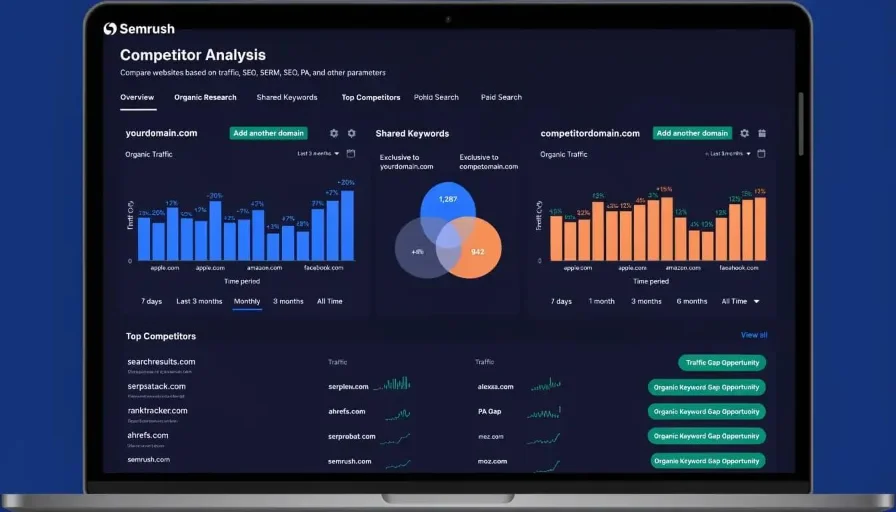
Semrush offers keyword research and competitive analysis features.
Its keyword metrics can help you compare search terms, explore related keywords, and identify potential ranking opportunities.
3. Moz
Moz provides a Keyword Explorer with a difficulty estimate.
Use it alongside search volume and SERP analysis rather than treating the score as a guarantee.
4. Ubersuggest
Ubersuggest offers keyword ideas and SEO competition estimates.
It can be useful for beginners who want to explore keyword opportunities and compare related search phrases.
How to Measure Keyword Competition Manually
You do not always need a paid SEO subscription. You can examine Google search results yourself.
Follow these steps:
- Search your target keyword in Google.
- Review the first ten organic results.
- Check whether the results come from major brands or smaller websites.
- Compare the relevance of their titles and content.
- Look for missing information or unanswered questions.
- Check whether the search results match your intended content format.
- Decide whether you can create something more useful.
For example, suppose you want to target “free PDF compressor online.”
Look at the competing pages and ask:
- Do they offer a working online compressor?
- Do they explain file size limits?
- Do they support mobile devices?
- Do they explain privacy and file security?
- Are their instructions clear?
If you can provide a genuinely useful tool and better supporting information, you may have a worthwhile opportunity.
How to Choose the Right Keyword Difficulty for Your Website
Your ideal keyword difficulty depends on your website’s experience, content quality, topic relevance, and competition.
| Website situation | Suggested keyword approach |
|---|---|
| Brand-new website | Specific, relevant long-tail topics |
| Growing website | Low-to-medium competition opportunities |
| Established website | Mix of medium and competitive keywords |
| Strong niche authority | Broader and more competitive topics |
These are general planning guidelines, not fixed ranking rules.
A Simple Keyword Prioritization Method
Before creating an article, evaluate these five factors:
- Relevance: Does the keyword match your website?
- Intent: Can your page satisfy the searcher’s goal?
- Difficulty: How competitive are the existing results?
- Search demand: Is there evidence that people search for it?
- Content opportunity: Can you create something more helpful?
A keyword with lower difficulty but almost no relevance may be less valuable than a moderately competitive keyword that closely matches your audience.
Example: Choosing Keywords for an Online Tools Website
Imagine you operate a website offering free image and PDF tools.
You might compare these keywords:
| Keyword | Search intent | Priority example |
|---|---|---|
| Image tools | Broad | Low initially |
| Free image resizer online | Action-oriented | High |
| How to resize images without losing quality | Informational | High |
| Best image compressor for websites | Commercial investigation | Medium |
| Compress PNG images online | Action-oriented | High |
The best opportunity is not necessarily the keyword with the lowest difficulty. Choose terms that match your actual tools and allow you to create useful landing pages or tutorials.
Common Keyword Difficulty Mistakes to Avoid
- Trusting KD scores completely: Always review real Google results.
- Ignoring search intent: A low-difficulty keyword is not useful if your content cannot satisfy the searcher.
- Choosing only high-volume keywords: Specific searches may bring more relevant visitors.
- Ignoring relevance: Target keywords that fit your website’s subject.
- Copying competitors: Study their content to find opportunities, not to duplicate it.
- Ignoring content quality: A low KD score does not guarantee rankings.
- Treating third-party metrics as Google’s ranking factors: These scores are estimates, not official Google measurements.
Conclusion
Keyword difficulty is a useful part of keyword research because it helps you understand potential competition before investing time in content creation. However, it should never be your only decision-making metric.
Review competing pages, understand search intent, check keyword relevance, and create genuinely helpful content. For newer websites, specific and relevant keyword opportunities can be a practical starting point for building organic search visibility.
Next Article – Article 18: How to Find Question Keywords for SEO: Use Questions to Create Helpful Content
Frequently Asked Questions
There is no universal good score. A lower score can indicate a less competitive opportunity, but you should also evaluate relevance, search intent, and competing pages.
No. Keyword difficulty scores are created by third-party SEO platforms. Google does not provide an official KD score.
It is possible, but often challenging. A new website may benefit from building topical relevance and targeting more specific searches first.
Time needed: 5 minutes
Learn what keyword difficulty means, how to measure SEO competition, and how to choose the right keywords for better search visibility.
- Can I check keyword competition for free?
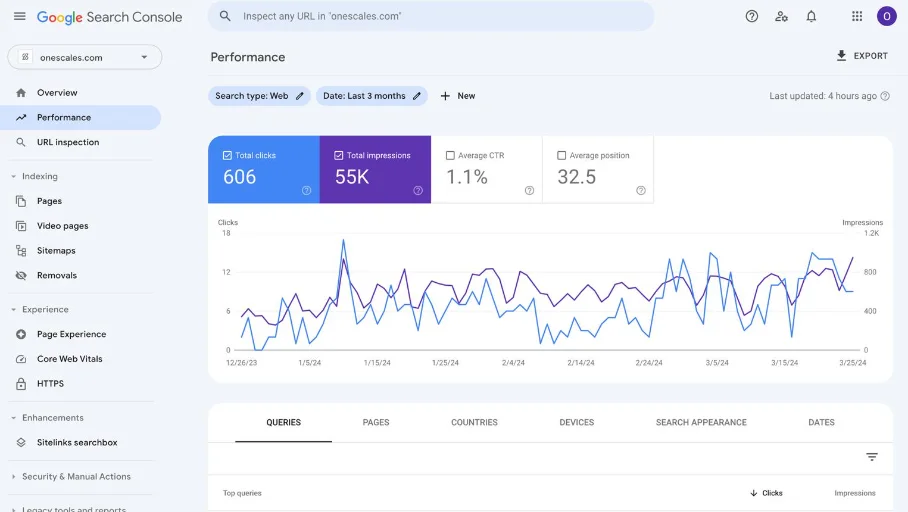
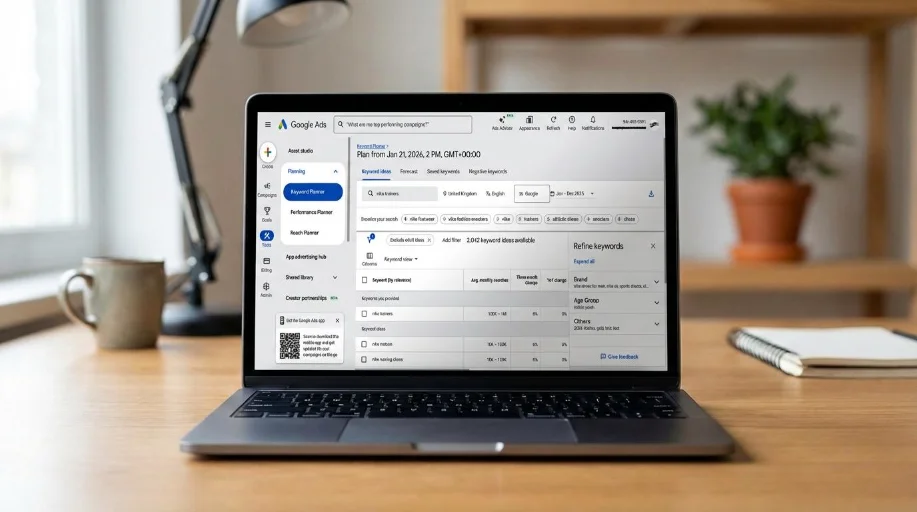
Yes. You can review Google search results, use Google Keyword Planner for advertising competition estimates, and explore Google Search Console for your own website’s search performance.