
First-time international travelers
Meta Description: First-time international travelers can plan a stress-free trip with these 15 essential tips for passports, visas, flights, packing, safety, and budgeting.
Related Keyphrases: International travel tips, first international trip, travel planning guide, overseas travel checklist, travel safety tips
Introduction
Traveling to another country for the first time is an exciting experience. You might dream of exploring beautiful cities, tasting new foods, visiting famous landmarks, or meeting people from different cultures. However, international travel can also feel confusing when you do not know what to expect.
First-time international travelers often have questions about passports, visas, flight bookings, accommodation, money, and airport procedures. Fortunately, a little preparation can make the entire experience much easier. You do not need to be an experienced traveler to enjoy a successful international trip. Instead, you need a clear plan, realistic expectations, and a willingness to learn along the way.
In this guide, you will discover 15 practical international travel tips to help you prepare for your first overseas adventure. From organizing essential documents to staying safe in unfamiliar places, these suggestions will help you travel with greater confidence.
1. Choose the Right Destination for Your First Trip
كل ما تريد معرفته عن السياحة في إسطنبول وأهم الأماكن السياحية

Hop-On Hop-Off UAE Bus Tours | See the Best of Dubai & Abu Dhabi

Choosing your first destination is one of the most important decisions you will make. Although famous destinations can look attractive online, the best choice depends on your budget, interests, travel experience, and visa requirements.
For example, Malaysia offers modern cities, cultural attractions, and tropical scenery. Türkiye combines historic landmarks with delicious food and beautiful landscapes. Meanwhile, the United Arab Emirates offers impressive architecture, shopping, and desert adventures.
Before making a decision, research the destination’s safety, transportation, weather, accommodation, and entry requirements. Also, check whether the local language or customs could affect your experience.
Helpful tip: Choose a destination that matches your budget and comfort level rather than selecting a place simply because it is popular on social media.
2. Check Your Passport’s Validity
Your passport is one of the most important documents you need for international travel. Without a valid passport, you generally cannot board an international flight or enter another country.
Before booking your trip, check your passport’s expiration date. Some countries require passports to remain valid for at least six months beyond your arrival date or intended stay. However, requirements vary by destination and nationality.
Additionally, make sure your passport has enough blank pages if your destination requires them for immigration stamps or visas.
Keep a digital copy of your passport in a secure location. You can also carry a separate paper copy in your luggage. Nevertheless, remember that copies do not replace the original passport.
3. Understand Visa and Entry Requirements
Visa requirements can vary significantly between countries. Some destinations offer visa-free entry to certain nationalities, while others require an embassy-issued visa or an electronic travel authorization.
Therefore, research the official immigration website of your destination before booking non-refundable flights or accommodation.
Check the following requirements:
- Whether you need a tourist visa.
- Which documents you must submit.
- Whether proof of accommodation is required.
- Whether you need a return or onward ticket.
- Whether you must provide evidence of sufficient funds.
- Whether vaccination certificates or other health documents are required.
Furthermore, make sure you understand the permitted length of stay and any restrictions on working or studying.
Important: Always verify visa information through official government sources. Airline staff may deny boarding if your travel documents do not meet the destination’s requirements.
4. Create a Realistic Travel Budget
Travel Budget Calculator – EasyTripExpenses Blog
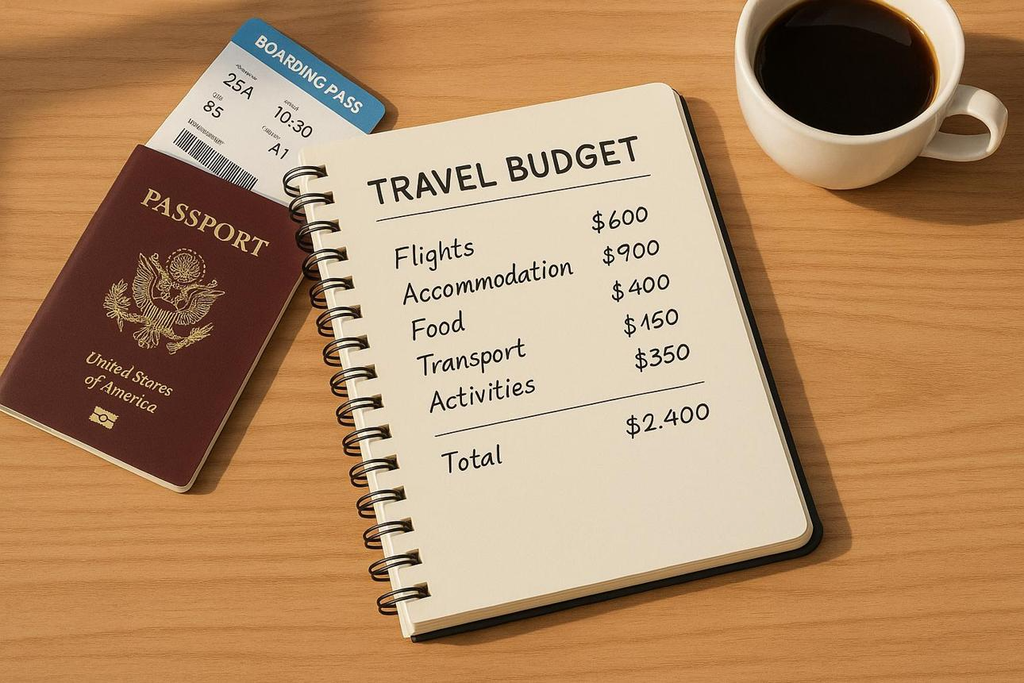
Budget planning helps first-time international travelers avoid unnecessary financial stress. Although flight tickets may seem like the biggest expense, accommodation, meals, transportation, activities, and travel insurance can increase the total cost considerably.
Start by estimating the main expenses before you book anything. Then, compare different travel dates and accommodation options to find a suitable price.
Your budget should include:
- International flights.
- Hotel or other accommodation.
- Food and drinking water.
- Local transportation.
- Tourist attractions and activities.
- Visa fees and travel insurance.
- Mobile data and communication.
- Emergency money.
In addition, keep a separate emergency fund for unexpected expenses such as missed connections, medical treatment, or last-minute accommodation.
You do not need an expensive holiday to enjoy an international trip. With careful planning, you can explore a destination while staying within your financial limits.
5. Book Flights Carefully
Booking your first international flight can feel complicated, especially if you have never traveled through a large airport.
Before purchasing a ticket, compare airlines, baggage allowances, departure times, arrival airports, and cancellation policies. A cheaper ticket may not be the best deal if it excludes checked baggage or includes an inconvenient connection.
If possible, choose a straightforward itinerary for your first trip. A direct flight can reduce the stress associated with changing planes and navigating unfamiliar airports.
If you must take a connecting flight, check whether you need a transit visa. Also, confirm whether your baggage will be transferred automatically or whether you must collect and recheck it.
Finally, review your ticket carefully to ensure that your name matches your passport and your travel dates are correct.
6. Choose Accommodation in a Convenient Area
Your accommodation can strongly influence your travel experience. A hotel with a low nightly rate might cost more overall if it is far from public transportation and major attractions.
Consequently, compare the location, reviews, safety, transport connections, and cancellation policy before booking.
For a first international trip, staying in a well-connected area can make it easier to explore the city. Look for accommodation near reliable public transportation, restaurants, supermarkets, and important attractions.
Moreover, read recent guest reviews instead of relying entirely on promotional photographs.
Save the full address and booking confirmation on your phone. You may need to show the address to an airport taxi driver or immigration officer.
7. Pack Smart and Avoid Overpacking
How to pack for week long trip: Smart Tips to Travel Light – Voyage Luggage
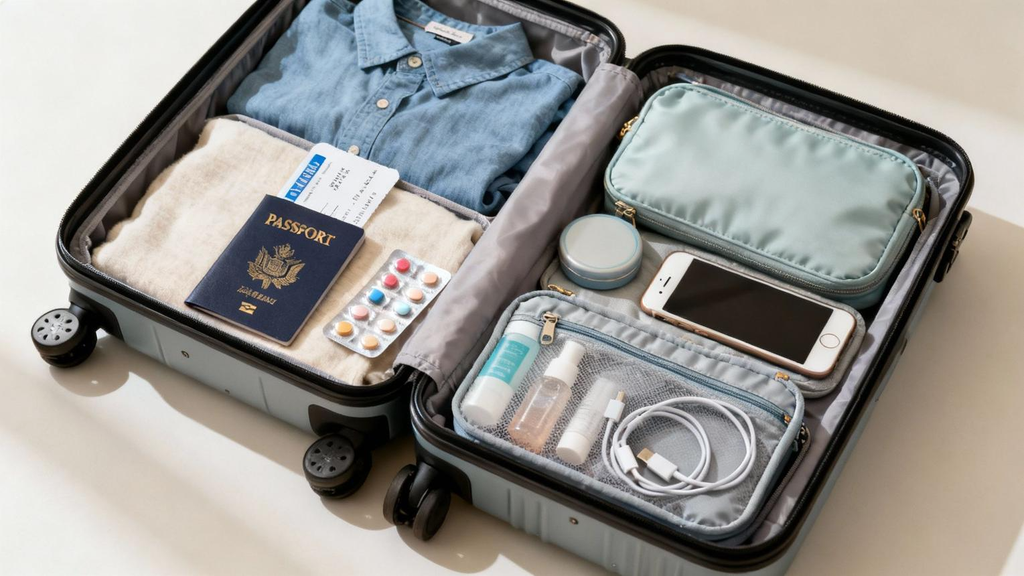
Packing can become stressful when you try to prepare for every possible situation. Instead, focus on items that you genuinely need.
Start by checking the weather forecast for your destination. Then, choose comfortable clothing suitable for the local climate, planned activities, and cultural expectations.
Keep essential items in your carry-on bag, including your passport, travel documents, prescribed medicines, phone, charger, and a change of clothes if space permits.
Remember to check your airline’s restrictions on liquids, batteries, sharp objects, and cabin baggage dimensions.
Here are a few additional packing suggestions:
- Carry comfortable walking shoes.
- Pack a universal travel adapter if necessary.
- Bring a reusable water bottle where permitted.
- Keep valuables secure and accessible.
- Leave unnecessary items at home.
As a result, you can move around more comfortably and spend less time managing heavy luggage.
8. Arrive at the Airport Early
Airports can be confusing for first-time international travelers because they involve several procedures. These may include check-in, baggage drop-off, security screening, immigration, and boarding.
For many international flights, arriving around three hours before departure is a useful starting point. However, follow your airline’s instructions because some airports and itineraries require different arrangements.
When you arrive, check the departure screens for your flight number and check-in counter. After checking in, follow the signs to security and immigration.
Keep your passport and boarding pass easily accessible. In addition, listen for announcements because boarding gates and departure times can sometimes change.
Most importantly, do not wait until the last minute to reach your gate. Boarding often closes before the scheduled departure time.
9. Learn Basic Airport and Travel English
Knowing a few common English phrases can make international travel easier, particularly in airports and tourist areas where English is widely used.
For example, learn how to ask where the departure gate is, where to collect your baggage, or how to reach your hotel.
Useful phrases include:
- “Where is the check-in counter?”
- “Could you help me find my gate?”
- “Where can I collect my luggage?”
- “How much does this cost?”
- “Could you please show me the way?”
- “I need help. Could you contact the authorities?”
However, English is not spoken everywhere. Therefore, download an offline translation app and learn a few polite expressions in the local language.
Even simple words such as “hello,” “please,” and “thank you” can help you communicate respectfully with local people.
10. Manage Your Money Wisely
Handling money in another country requires some preparation. Depending on your destination, you may need local cash, an international payment card, or both.
Before leaving, ask your bank whether your card works internationally and what fees apply to foreign transactions. Also, inform your bank about your travel plans if required by its policies.
Exchange a reasonable amount of money for immediate expenses, such as transportation or food. Nevertheless, avoid carrying all your money in one wallet.
When using an ATM, choose a secure location and check the transaction details carefully. If a payment terminal offers to charge you in your home currency or the local currency, compare the exchange-rate terms; paying in local currency often avoids the extra conversion markup associated with dynamic currency conversion.
Keep an emergency payment method separate from your everyday wallet. This way, you have a backup if your primary card is lost or blocked.
11. Protect Your Personal Safety
Safety should always be a priority when visiting an unfamiliar country. Most trips can be enjoyable and trouble-free, but remaining aware of your surroundings is still important.
Research local laws, common scams, transportation options, and areas where additional caution may be necessary. In addition, use reputable transport services and confirm the vehicle details before getting inside.
Keep your phone, passport, and wallet secure in crowded places. Avoid displaying large amounts of cash, and be cautious when strangers offer unsolicited assistance with money or travel arrangements.
At night, stick to well-lit areas and use trusted transportation. If something feels suspicious, move to a safer location.
It is also wise to share your itinerary with a trusted family member or friend. Save the local emergency number and your country’s nearest embassy or consulate contact details.
12. Purchase Suitable Travel Insurance
Travel insurance can help protect you against certain unexpected expenses during an international trip. Depending on the policy, coverage may include emergency medical treatment, trip cancellation, baggage loss, or travel delays.
Before purchasing a policy, read its terms carefully. Check coverage limits, exclusions, deductibles, and any requirements for pre-existing medical conditions.
For example, some policies exclude particular activities or require advance approval for certain medical services.
Additionally, verify whether your destination requires proof of travel medical insurance for visa approval or entry.
Although insurance adds to your travel budget, suitable coverage can provide valuable financial protection when unexpected problems occur.
13. Stay Connected Abroad
Reliable mobile connectivity makes it easier to navigate unfamiliar streets, contact family, check reservations, and access emergency information.
Before departure, check whether your mobile network offers affordable international roaming. Alternatively, consider a local SIM card or an eSIM if your phone supports it and the destination offers suitable service.
Download offline maps of your destination before leaving home. Save hotel details, transport information, and important reservations so you can access them without an internet connection.
Furthermore, use secure internet connections when handling sensitive information. Avoid accessing banking accounts over unfamiliar public Wi-Fi networks unless you have suitable security protections.
Keep your phone charged throughout the day. A small power bank can be particularly useful during long sightseeing trips, subject to airline battery rules.
14. Respect Local Culture and Laws
Every country has its own customs, traditions, and laws. Learning about them before your arrival can help you avoid misunderstandings and make a positive impression.
For instance, some destinations have specific expectations regarding clothing at religious sites. Others have rules about photography, public behavior, alcohol, or carrying particular items.
Therefore, research local customs and follow posted instructions when visiting cultural or religious attractions.
Ask permission before photographing people, especially in private or sensitive settings. Also, avoid making assumptions about local traditions based on information from social media.
Respectful behavior helps you connect with local communities and enjoy more meaningful travel experiences.
15. Plan Your Itinerary but Stay Flexible
A simple itinerary helps you make the most of your time abroad. However, filling every hour with activities can leave you exhausted.
Start by identifying the attractions you most want to visit. Group nearby places together to reduce travel time and transportation expenses.
For example, you might spend one day exploring historic landmarks, another visiting museums, and a third discovering local markets or natural attractions.
Nevertheless, leave some free time for unexpected discoveries. Weather changes, transport delays, and longer-than-expected queues can affect your plans.
Keep digital copies of your reservations and note the opening hours of important attractions. If an activity becomes unavailable, having an alternative plan will help you enjoy the rest of your trip.
Remember that travel is not simply about visiting as many places as possible. It is also about experiencing a destination at a comfortable pace.
Common Mistakes First-Time International Travelers Should Avoid
Even well-prepared travelers can make mistakes. Fortunately, you can avoid many common problems by checking a few details in advance.
First, do not book flights before confirming the relevant passport and visa requirements. Second, avoid packing too much because heavy luggage can make transportation more difficult.
Similarly, do not depend on a single bank card or assume that your phone will have internet access everywhere. Keep backup payment options and essential information available offline.
Finally, avoid planning an unrealistic schedule. Allow time for airport procedures, transportation, rest, and unexpected delays.
By preparing carefully, you can reduce avoidable problems and focus on enjoying your international adventure.
Conclusion
International travel can open the door to new experiences, friendships, cultures, and unforgettable memories. Although your first overseas trip may seem challenging, the right preparation can make it much more manageable.
Start by choosing a suitable destination, checking your passport and visa requirements, and creating a realistic budget. Then, arrange your flights and accommodation, pack carefully, and learn about local transportation and customs.
Most importantly, stay flexible and approach unfamiliar experiences with curiosity. You do not need to know everything before you leave. Instead, take sensible precautions, ask for help when necessary, and learn as you travel.
With these tips for first-time international travelers, you can prepare confidently and enjoy your first journey abroad with fewer surprises and greater peace of mind.
Frequently Asked Questions (Q&A)
Check your passport validity, confirm visa and entry requirements, book flights and accommodation, arrange suitable travel insurance, and prepare a realistic budget. Also, save important documents and emergency contacts.
The amount depends on your destination, trip length, accommodation, and planned activities. Calculate your expected expenses in advance and keep additional emergency funds available.
Common documents include a valid passport, any required visa or travel authorization, flight tickets, accommodation details, and relevant supporting documents. Requirements vary according to your nationality and destination.
Time needed: 7 minutes
Review your airline’s baggage rules, check in online when available, arrive at the airport at the recommended time, and keep your passport and boarding pass accessible. If you have a connecting flight, confirm your transit and baggage requirements beforehand.
- How can I stay safe when traveling abroad for the first time?
Research your destination, protect your valuables, use reputable transportation, follow local laws, and share your itinerary with someone you trust. Keep emergency contacts and backup payment methods available.